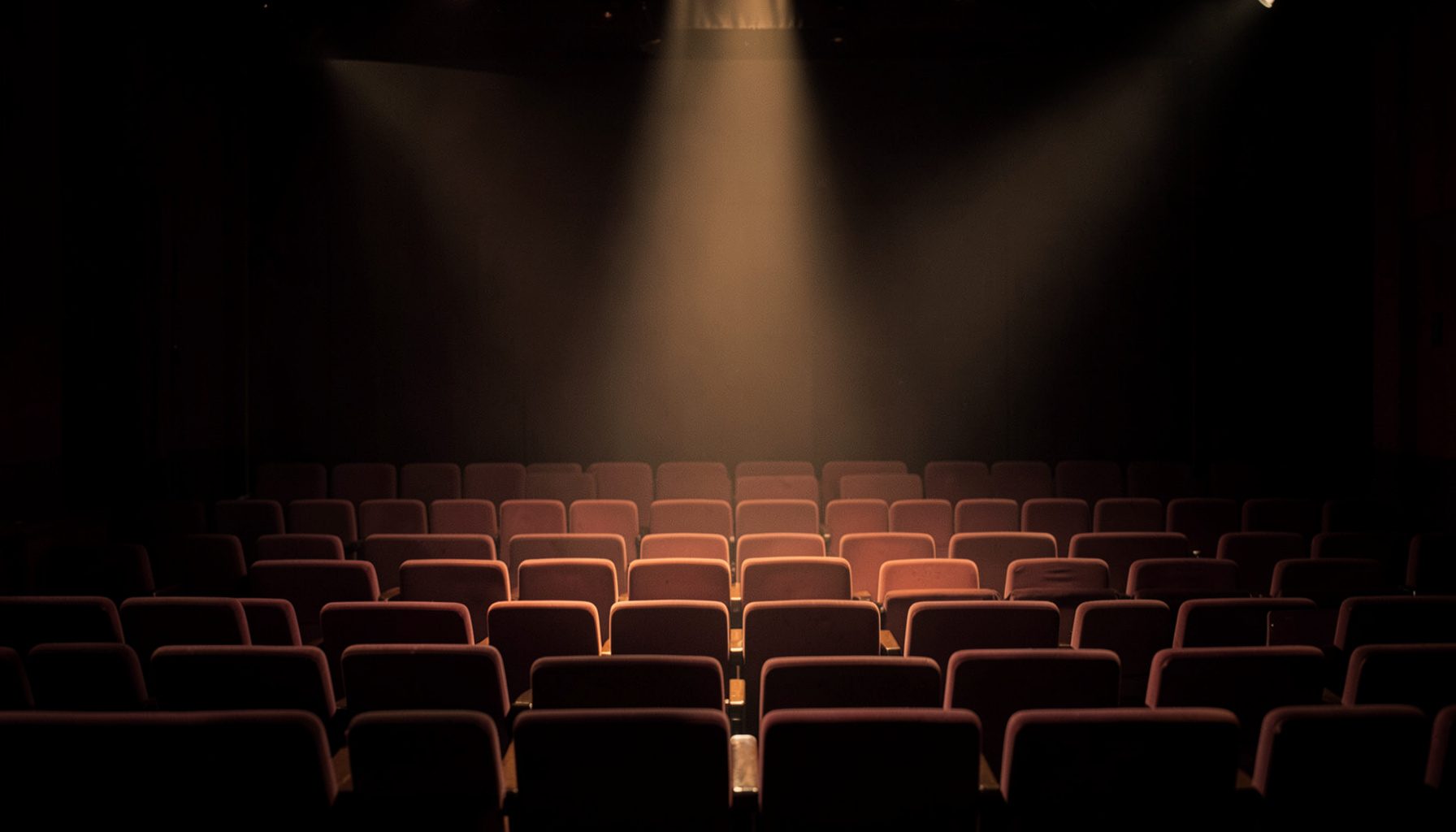
A Primer on the Theater of the Absurd in Local Productions
The Theater of the Absurd emerged in postwar Europe, when writers began questioning whether language, logic and familiar social structures could still explain human experience. Plays associated with Samuel Beckett, Eugène Ionesco, Jean Genet and Harold Pinter often replace tidy plots with repetition, silence, circular conversations and unsettling comedy.
For Australian audiences, absurdist drama can seem both distant and surprisingly familiar. A bare stage in a Melbourne warehouse, a stalled conversation in a Sydney studio, or a strange domestic ritual in a Perth black-box venue can turn ordinary life into a theatrical puzzle.
Absurdism does not mean that a production is random or meaningless. Its unusual rhythms usually expose the gap between what people say and what they actually understand. A character may repeat a request for a train, a cup of tea or an explanation, while the world offers no satisfying answer.
Local productions also give this tradition a distinctive setting. Australian companies work within short seasons, modest budgets, touring networks and audiences accustomed to festival experimentation, from Adelaide Fringe to independent programs in Brisbane, Hobart and regional centres.
Where Absurdism Comes From
The term is closely linked to the French critic Martin Esslin, whose 1961 book identified a theatrical movement rather than a formal school. The writers grouped under the label did not share one manifesto, and many resisted being called absurdists.
Their common concern was the collapse of reliable meaning. After two world wars, genocide and political upheaval, conventional dramatic realism could appear inadequate. Instead of presenting clear motives and neatly resolved conflicts, absurdist plays make uncertainty the central event.
The Dramatic Features to Notice
Language is often the first clue. Characters speak fluently yet fail to communicate, use clichés as emotional shields or produce elaborate explanations that lead nowhere. Repetition can become a form of pressure, making a small exchange feel ritualistic and threatening.
Time may appear frozen, circular or unreliable. A character waits for someone who never arrives; a scene restarts with minor changes; an ending returns to the opening image. Directors often use pauses, stark lighting, precise movement and an exposed stage to make the audience notice theatrical convention itself.
Comedy matters just as much as despair. A ridiculous hat, a failed entrance or a perfectly polite argument can provoke laughter before revealing loneliness or fear. The tension between slapstick and bleakness is one of absurdist theatre’s defining pleasures.
Reading a Local Production
When reviewing an absurdist production, plot summary is rarely enough. Consider how the actors handle silence, whether repetition gathers force, and how the design turns an ordinary object into a threat or a joke. A production may communicate more through timing than through dialogue.
Australian venues shape that timing. In a compact Melbourne studio, the audience may sit close enough to see every shift in an actor’s breathing. A Sydney production in a converted industrial space may use exposed brick, traffic noise or an awkward entrance from the foyer as part of its unstable world.
| Feature | Conventional Realism | Absurdist Practice |
|---|---|---|
| Plot | Moves towards explanation or resolution | Loops, stalls or refuses closure |
| Dialogue | Exchanges information and advances action | Repeats, evades or breaks down |
| Characters | Usually have readable motives | May behave as types, fragments or enigmas |
| Setting | Establishes a believable world | Feels symbolic, empty or changeable |
| Ending | Resolves a conflict | Leaves tension suspended or transformed |
Australian Contexts And Constraints
The local theatre market encourages inventive scale. Independent companies may mount a Beckett-inspired work for a short run, while larger organisations can give absurdist ideas more elaborate design and rehearsal time. Festivals such as Adelaide Fringe create room for hybrid performance, clowning and experimental adaptations that sit beside conventional drama.
Funding and touring also influence form. Support from Creative Australia or state arts bodies can help develop new work, but many artists still balance theatre with teaching, casual employment or screen work. A production designed for a 60-seat room may travel more easily than one requiring a large set, making minimalism a practical choice as well as an artistic one.
Performance, Place And Audience
Absurdist theatre depends heavily on bodies in space. A director might make a character’s repeated walk across the stage feel mechanical, then interrupt it with a single unexpected glance. The audience becomes alert to patterns that a realistic production might leave invisible.
Everyday Australian habits can sharpen the effect. The language of queues, workplace procedures, public transport announcements and polite small talk already contains comic rituals. A play about waiting may feel especially pointed in a city shaped by delayed trains, packed trams or long commutes, without needing to mention them directly.
Questions Worth Taking To A Review
Ask what the production makes strange. Is it family life, bureaucracy, masculinity, religion, technology or the promise of progress? The strongest interpretations usually connect the play’s formal oddities with a recognisable anxiety rather than treating nonsense as decoration.
It is also useful to consider cultural context and adaptation. Australian artists may approach European absurdism through First Nations dramaturgies, migrant experience, regional isolation or the pressures of housing and precarious work. Those perspectives should not be flattened into a universal claim that life is meaningless.
Live theatre in Australia is generally not governed by a single national classification system in the way films and games are, although venues, companies and state regulations still affect access, age guidance and content warnings. That flexibility places responsibility on artists and critics to describe disturbing material clearly and thoughtfully.
Explore current productions with attention to their pauses, patterns and silences, then compare those choices with the work of earlier absurdist writers. Follow Dueling Critics for reviews and conversations that examine how strange theatre speaks to the realities of Australian stages and audiences.