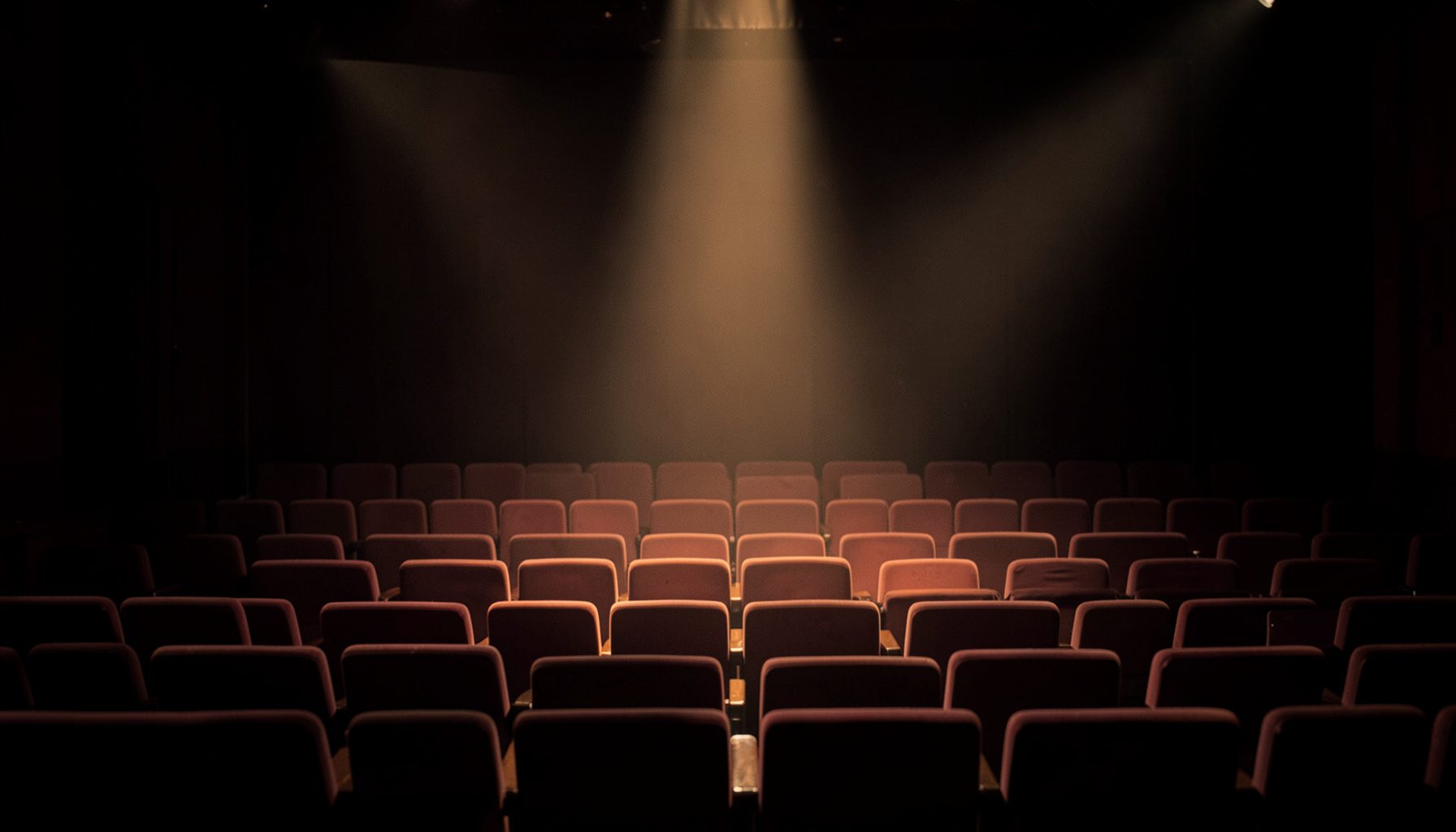
Staging a musical in a black box: what changes in the room
The hardest part of a musical in a small room is that nothing can hide. A singer in a concert hall can place a note in the air and let it carry; in a black box the audience hears the breath before the note, the scrape of a chair, the drummer counting in. Every effect has to survive that proximity.
Australians use "black box" loosely for any flexible studio rather than a room painted matte black. The Performance Space in Kensington, Melbourne, seats a little over a hundred and can be rearranged to suit the show. The Street Theatre in Sydney's The Rocks and the Court at Walsh Bay work at similar scale, and the Blue Room at Perth Cultural Centre seats roughly a hundred.
Musicals want more than such a room offers: a band, a chorus, a set that changes, a score written for particular voices. Scale a production down carelessly and it loses the reason it was staged. Scale it intelligently and the limits become the appeal — live musicians, close bodies, no safety net of spectacle.
Here is how the problem breaks down: acoustics, sightlines, scenery, money and the Australian arithmetic of tickets, distance and touring. The rules are hard but not secret, and small rooms have produced some of the best musical theatre of the past decade.
What counts as a black box in Australia
"Black box" here usually means a studio: a rectangular room, flat floor, simple lighting grid, no orchestra pit, rearrangeable seating. The director chooses the seating plan as part of the design, and every choice comes with a bill attached.
The contrast with the house most musicals are written for is worth setting out plainly.
| Consideration | Black box studio | Proscenium house |
|---|---|---|
| Sightlines | Close, flexible, three or four sides | Fixed and framed, long sightline |
| Sound | Reinforced vocals, small amplified band | Orchestral room, natural balance |
| Musical scale | Chamber scores, casts of six to twelve | Full orchestrations, large companies |
| Scenery | Imported flats, projections | Built sets, flying, spectacle |
| Ticket economics | Small capacity, levy bites | Capacity absorbs fixed costs |
| Feeling | Front row sees the seam | Formal, distant, ceremonial |
Read across the rows and the pattern is clear: a studio trades spectacle and scale for proximity and flexibility. A production for The Street or the Performance Space has to earn its effects with voices, bodies and light rather than scenery.
Sound, music and what the walls give back
Acoustics set the ceiling. Hard walls throw every word back, so dialogue turns into a shout and an unamplified ensemble becomes mud. The usual fix — a discreetly amplified band with radio mics — turns live players into a recording, and the gap between house and players is where intimacy quietly leaks away.
The alternative is the chamber musical: a score written for a handful of players, sometimes played in view or hidden in a corner. Sondheim's model, in which cast members double as musicians, travels well to studios because no pit has to look natural. Chicago's Steppenwolf runs the same logic at scale, reconfiguring its thrust stage between shows.
Even then, band size is a budget line. In Australia a reduced orchestration can be the difference between a national tour and a single city run, so chasing a full score can flatten the build of every number.
Sightlines, blocking and the audience in the room
In the round, the audience is scenery. Actors learn to place their best angles toward the house, and choreography gets rewritten for whichever face is watching. The seating plan comes first: on a thrust with audience on three sides, a singer cannot turn her back on a verse without losing half the room.
Proximity cuts both ways. A small audience can catch a cracked note and read the plot's turn before the script admits it. It also means no net: a missed entrance or a muddy cue is felt rather than noticed, and musicals need more rehearsal discipline than straight plays, not less.
Lighting becomes the architecture when there is no set to hide behind. A wash of colour, a single practical, a silhouette carries a studio stage more boldly than the same money would in a proscenium house.
Scenery, costume and spectacle without a budget
Scenery for a black box usually arrives in a van and leaves in one: flat-packed, minimal changeovers, no flying. That pushes ideas towards props that carry their own meaning. A carved figure like the Venus of Willendorf, instantly legible as a sign of the female body and of deep time, can stand in for an entire set on a small budget.
Costume does the same work. Three characters can become a chorus of matching uniforms, and a song needing twenty extras can be staged by five people under a single light. Australian community companies have rehearsed musicals in council studios and school halls for decades, and working small is now part of how new musicals are tested.
What you lose is the arrival. The curtain-lift reveal of a city street cannot happen in a room the audience is already sitting in; the reveal has to move into the actors' bodies, into a song, or into staging the room cannot cheat.
Money, markets and the next season
Australian economics sharpen the problem. Tickets carry a federal levy of ten per cent above seventy-five dollars, which lands harder on a studio show with a hundred and forty seats than on a house with a thousand. Capacity is the business, and small rooms have small ceilings.
Distance compounds it. A musical that works in a black box in Melbourne or Sydney can tour to regional centres, school halls and civic theatres in country towns for a fraction of the cost of a large production, which is why companies such as Theatre Works in Melbourne and the Courtney in Brisbane keep backing intimate formats.
Find one, and sit close. Check the season at The Performance Space in Kensington, The Street Theatre in The Rocks, the Space at Adelaide's Festival Centre and the Blue Room at Perth Cultural Centre, and take the cheapest seats you can — in a black box musical, the front row is where the experiment happens.